“Their wives likewise must be dignified, not slanderers, but sober-minded, faithful in all things.” (1 Timothy 3:11 (ESV)
Today’s text ushers in the frequently debated subject regarding whether the Apostle Paul was speaking just of the wives of deacons, or the possibility of women serving as deaconesses. God calls all believers in Christ into service (I Peter 4:10-11), but does I Timothy 3:11 allow for service in the office of deaconesses?
A key component to this discussion is the word Paul used in referring to these women (γυναῖκας; gynaikas). This plural noun means an unmarried adult women or an adult female wife of an adult male in the immediate context of I Timothy 3:8-10.
“In the requirements for those who would serve on the diaconate, Paul in today’s passage comments on the deacons’ “wives,” as the English Standard Version translates the Greek word gynaikas in 1 Timothy 3:11. But this word can also be rendered as “women,” which would make this passage have a significantly different meaning. If the passage is to be read as talking about the wives of male deacons, then the office of deacon, like the office of elder, is limited to men alone. Yet if gynaikas means “women,” then Paul is talking about female servants or deaconesses, opening up the diaconate to women as well as men. Unfortunately, it is hard to determine the apostle’s meaning because the contextual details provide little help in choosing the most appropriate translation,” explains one commentator.
What are the arguments “for” the office of deaconess? The following positive opinions are offered for consideration.
First, Paul gave no qualifications for elders’ wives (I Tim. 3:1-7). As such, there is no parallel for deacons’ wives. This at least suggests the office of deaconess is in view.
Second, an argument for deaconesses are the requirements given in verse 11, which will be examined later on in this essay. These requirements are the same as those mandated of male deacons (see vv. 8–10).
Third, supporters of deaconesses cite Romans 16:1. The Apostle Paul called Phoebe a diakonon, a version of the Greek word often translated as “deacon” (diakonos). Since Scripture interprets Scripture, this lends credence for the existence of deaconesses in the early church.
Finally, there is no specific command for women not having authority. What Paul wrote preventing women serving as church elders (1 Tim. 2:12–15; 3:1-7), he does refer to in 1 Timothy 3:8–13 barring women from the diaconate.
“The Greek word gynē can mean either “wife” or “woman. Paul likely here refers not to deacons’ wives, but to the women who serve as deacons. The use of the word “likewise” (cf. v. 8) suggests a third group in addition to elders and deacons. Also, since Paul gave no requirements for elders’ wives, there is no reason to assume these would be qualifications for deacons’ wives,” explains Dr. John MacArthur.
What are the alternative arguments against women serving as deaconesses? Opponents of women serving as deaconesses give several reasons why Paul would give qualifications for deacons’ wives and not those of elders’ wives.
First, deacons serve in ministries of mercy. They often have close contact with people on occasions when a woman’s assistance is needed. It would be awkward for male deacons to aid sick women in many instances. However, their wives could help bathe, dress, or even care for women with such needs.
Second, those opposed to Paul allowing for female deacons do not think it is significant the apostle called Phoebe a diakonon. The term can simply mean “servant,” not an ordained office.
While the debate continues as to whether the Scriptures support deaconesses, the qualifications for these wives was clearly stated. There are four highlighted behavioral qualities these women were to possess.
First, they were to be dignified as their husbands (I Tim. 3:8). To be dignified (σεμνάς; semnas) means a woman who was serious and worthy of respect.
Third, they must be sober-minded (νηφαλίους; nephalious). To be sober-minded means temperate and not one associated with wine or alcohol.
Fourth, they must be faithful in all things. To be faithful (πιστὰς; pistas) means to be committed to, dependent upon, trusting in and honoring the Lord Jesus Christ. These women were to be trustworthy in their lives and ministries.
“Reformed Christians who affirm Scripture’s final authority continue to differ over whether women may be ordained as deacons. What is not up for debate is that the traits Paul lists in 1 Timothy 3:11 should be true of all Christian women, regardless of one’s position on deaconesses,” concludes Dr. R. C. Sproul.
If you are a Christian woman, are you making a concerted effort to be dignified, to avoid slander, to be seriously minded about godliness, and to be faithful? If you are a man, are you encouraging the women in your life in these qualities?
May the Lord’s truth and grace be found here. Have a blessed day in the Lord.
8 Deacons likewise must be dignified, not double-tongued, not addicted to much wine, not greedy for dishonest gain. 9 They must hold the mystery of the faith with a clear conscience. 10 And let them also be tested first; then let them serve as deacons if they prove themselves blameless.” (1 Timothy 3:8–10 (ESV)
Today’s text strongly indicates deacons are to have the same character as elders (Acts 6:3; I Tim. 3:1-7). Deacons are also to evidence their godly character by their godly behavior. What is true for all believers in Christ (Gal. 5:22-23; Eph. 2:10) is especially so for these servant leaders. In carrying out their practical servant duties on behalf of believers in Christ, how are deacons to behave?
First, they must be dignified (σεμνούς; semnous). This means deacons are to be worthy of respect. In other words, they are to be honorable, gracious, and respectable men. They are to view their lives in Christ, as well as their deaconship before Christ on behalf of believers in Christ, as an honorable calling.
Second, deacons are not to be double-tongued (διλόγους; dilogous). To be double-tongued is to be insincere in what you say. It refers to saying one thing and meaning another. Or, it refers to saying something but not being truthful in what you said.
“To be dignified is to be serious in mind and character; not silly or flippant about important matters. To not be double-tongued means deacons must not say one thing to some people and something else to others; their speech must not be hypocritical, but honest and consistent,” explains Dr. John MacArthur.
Thirdly, deacons must not be addicted to much wine (οἴνῳ πολλῷ προσέχοντας; oino pollo prosechontas). This phrase refers to being presently and actively attentive to drinking alcohol.
Fourth, they are not to be greedy for dishonest gain (αἰσχροκερδεῖς; aischrokerdeis). The Authorized Version translation uses the phrase “guilty of filthy lucre.” This means deacons are not to be men who have an insatiable appetite for wealth and ready to procure it by disgraceful means.[1]
“Like elders (see I Tim. 3:3), deacons must not abuse their office to make money. Such a qualification was especially important in the early church, where deacons routinely handled money, distributing it to those in need,” continues Dr. MacArthur.
Fifth, Paul stated deacons “must hold the mystery of the faith with a clear conscience.” In Paul’s epistles, mystery (μυστήριον; mysterion) refers to the mysteries of God, of his will, of Christ, of the gospel, of iniquity, the mystery kept secret or hidden away. To have a clear conscience (καθαρᾷ συνειδήσει; kithara syneidesei) means to have an ethically clean understanding and awareness of the Gospel. It is the Gospel for which the deacon must presently and actively hold (ἔχοντας; echontas). He can never depart from the truth of the Gospel of Christ.
“Although the deacon is tasked primarily not with teaching the people of God but with mercy ministries such as caring for widows and orphans (Acts 6:1–6), there are many occasions in which deacons will offer instruction. Assisting a family who is suffering a severe budget crisis involves the distribution of funds and advice in how to wisely use the family’s finances. In this case, the deacon will undoubtedly rely on the wisdom and principles of Scripture to help the family learn how to manage their money. When the opportunity comes to help non-Christians, the deacon may very well be called upon to explain the Christian faith and the motivation it provides for doing “good to everyone” (Gal. 6:10). These situations and many others that can possibly arise require deacons to be solidly grounded in the truths of the Bible,” explains Dr. R. C. Sproul.
“Deacons must hold the mystery of faith “with a clear conscience” (1 Tim. 3:9). In other words, their consciences should not accuse them of lying when they profess the Christian faith. A deacon’s confession must not be mere lip service but something that he embraces with both mind and heart. The deacon without a clear conscience lacks the integrity needed to do his job well. More importantly, he lacks saving knowledge of the One whom he claims to serve.”
Sixth, deacons must finally be tested (δοκιμαζέσθωσαν; dokimazesthosan). This means God commands elders to continually examine and approve active, and potential, deacons.
It should be clearly evident men who serve as deacons must meet these qualifications. If they do not, they cannot serve in this office.
May the Lord’s truth and grace be found here. Have a blessed day in the Lord.
The following article is by Rev. Kevin Dr. Gardner. He is associate editor of Tabletalk magazine, resident adjunct professor at Reformation Bible College in Sanford, Fla., and a teaching elder in the Presbyterian Church in America. This essay, entitled Defining our Terms, appeared in the March 2015 issue of Tabletalk.
The doctrine of Scripture is foundational to the Christian faith. But there is more to say about Scripture than simply, “The Bible says it. I believe it. That settles it.” If you don’t grasp what the Bible is and how it came to be, you’ll never fully grasp its meaning. Since the meaning of the Bible is vitally important to our faith and life, we will here briefly define a few key terms that relate to the doctrine of Scripture as the study of God’s Word written.
Authority: The power the Bible possesses, having been issued from God, for which it “ought to be believed and obeyed” (Westminster Confession 1:4). Because of its divine author, the Bible is “the source and norm for such elements as belief, conduct, and the experience of God” (Westminster Dictionary of Theological Terms).
Autographs: The original texts of the biblical books as they issued from the hands of the human authors.
Canon: The authoritative list of inspired biblical books. Within a short time after Jesus’ death, the New Testament canon was affirmed by evaluating the Apostolicity, reception, and teachings of books, but ultimately, the canon is self-authenticating, as the voice of Christ is heard in it (John 10:27; WCF 1:5).
Inerrancy: The position that the Bible affirms no falsehood of any sort; that is, “it is without fault or error in all that it teaches,” in matters of history and science as well as faith (Chicago Statement on Biblical Inerrancy). Inerrancy allows for literary devices, such as metaphors, hyperbole, round numbers, and colloquial expressions.
Infallibility: The position that the Bible cannot err or make mistakes, and that it “is completely trustworthy as a guide to salvation and the life of faith and will not fail to accomplish its purpose” (Westminster Dictionary). As the Christian church has traditionally taught, this doctrine is based on the perfection of the divine author, who cannot speak error.
Inspiration: The process by which God worked through the human authors of the Bible to communicate His revelation. The term derives from the Greek theopneustos, meaning “God-breathed” (2 Tim. 3:16), and refers to God as the ultimate source of the Scriptures.
Organic inspiration: The process by which God guided the human authors of Scripture, working in and through their particular styles and life experiences, so that what they produced was exactly what He wanted them to produce. The text is truly the work of the human authors—God did not typically dictate to them as to a stenographer—and yet the Lord stands behind it as the ultimate source.
Necessity: Refers to mankind’s need for God’s special revelation in the Scriptures in order to obtain knowledge of the gospel and the plan of salvation, which cannot be learned through the general revelation of nature and conscience.
Perspicuity: The clarity of the Bible; that is, that which is necessary to know and believe regarding life and salvation is “so clearly propounded, and opened in some place of Scripture or the other,” that anyone may understand them (WCF 1:7).
Scripture: From the Latin scriptura, meaning “writings”; refers to sacred texts, but more specifically, the Bible as the Word of God written.
Special revelation: The things that God makes known about Himself apart from nature and conscience (general revelation; cf. Rom. 1:19–21). These things, having to do with Christ and the plan of salvation, are found only in the Bible.
Sufficiency: All that is needed to know and believe regarding salvation and what pleases God is found in the Bible.
Verbal, plenary inspiration: The extending of God’s superintendence of the writing of Scripture down to the very choice of words, not merely to overarching themes or concepts; that is, “the whole of Scripture and all of its parts, down to the very words of the original,” were inspired (Chicago Statement).
May the Lord’s truth and grace be found here. Have a blessed Lord’s Day.
8 Deacons likewise must be dignified, not double-tongued, not addicted to much wine, not greedy for dishonest gain. 9 They must hold the mystery of the faith with a clear conscience. 10 And let them also be tested first; then let them serve as deacons if they prove themselves blameless.” (1 Timothy 3:8–10 (ESV)
As surprised as we might be by divisiveness in the church, and as uncomfortable and maddening as it may feel at times, such cracks in the walls have dogged us from the beginning.
The kinds of cracks have varied from age to age and culture to culture, but give any congregation enough time — even the best of them — and cracks will emerge. They’re side effects of making covenants with fellow sinners — as unpleasant as they are unavoidable. It’s just part of keeping a home in a fallen world.
Many have tried hard to diagnose and treat the current cracks in our walls — politics and elections, mask mandates and rebellions, racial disparity and superiority, men’s and women’s roles in the home and beyond, domestic abuse and other moral failures, and so on — but many of them have overlooked or marginalized a missing ingredient to harmony. In fact, I can’t help but wonder if the wildfires in some pews are as fierce and contagious as they are because this piece seems so small in many of our eyes.
When God planted the first churches, he knew the cracks he’d find. He wrote them into our stories, in fact, because he knew that cracked but loving churches served his purposes better than ones with brand-new walls and pristine floors. He had planned the cracks, and he had plans for the cracks, and one of those plans was called deacons.
Strong Enough to Help
We first encounter deacons during a meal (which, as any normal family knows, is when fights often break out). As the early church began to meet and grow, Greek-speaking Jews who had been scattered outside of Israel (“Hellenists”) returned to Jerusalem to join the church and follow Jesus. After a while, though, they came and complained to the Hebrew-speaking apostles because Greek widows were not receiving the food they needed (Acts 6:1).
Urgent needs like this, as any church knows, require time and attention, pastoral sensitivity, and careful follow-through. This meant the leaders would have less time and attention for teaching and prayer, and they knew the church would suffer even more if that were the case (Acts 6:2). So, the apostles called the church to appoint seven men to make sure all were fed well. And because they did, “the word of God continued to increase, and the number of the disciples multiplied greatly in Jerusalem” (Acts 6:7).
How much or little we think of diaconal ministry today rests, in significant measure, on what problem we think those first proto-deacons were solving. Was this merely a matter of entrées and sides for some lonely and vulnerable women, or was the church facing a deeper, more sensitive threat?
Matt Smethurst, in his introduction to deacons, draws our attention to the greater dangers hiding beneath the dining tables:
How our churches react to conflict can make all the difference in whether our gospel witness is obstructed or accelerated. Acts 6 is a story of church conflict handled well. The seven weren’t merely deployed to solve a food problem. Food was the occasion, sure, but it wasn’t the deepest problem. The deepest problem was a sudden threat to church unity. (Deacons, 44, 52)
“How could the church win the war for souls if there were wars within her walls?”
Cracks were suddenly surfacing and spreading. How could the church win the war for souls if there were wars within her walls? How could the word run if its people were mired in swamps of bitterness? The church didn’t merely need better waiters; it needed peace and healing. It needed men strong and wise enough to help mend fractures in the family.
Giants Bowing Low
Many might hear deacon and immediately think of dull or menial tasks that few people want to do — building maintaining, budget crunching, nursery cleaning, furnace repairing, meal serving. They might imagine a sort of junior-varsity team that relieves the pastors of lesser work. When the apostles saw those seven men, however, they saw something different in them — a stronger and more vibrant force for good, a noble and vital ministry.
We know how much they thought of diaconal work because of the kind of men they appointed: “Pick out from among you seven men of good repute, full of the Spirit and of wisdom, whom we will appoint to this duty” (Acts 6:3). They weren’t content with someone who was handy around the house or good with spreadsheets; they wanted men filled with the Spirit and abounding in wisdom. These were remarkable men doing difficult and precious work. “The apostles did not delegate this problem to others because it wasn’t important,” Smethurst observes, “but because it was” (53).
Because they knew how much food could poison fellowship, they set spiritual giants-in-the-making like Stephen over the tables. “And Stephen, full of grace and power, was doing great wonders and signs among the people” (Acts 6:8). The Jewish leaders “could not withstand the wisdom and the Spirit with which he was speaking” (Acts 6:10). And yet feeding widows was not beneath him. In fact, the faith and humility that freed him to quietly serve tables was the same faith and humility that freed him to boldly die for Jesus (Acts 7:58). Like Jesus, he knew that those who bow down lowest get to see more of God and his glory.
Diaconal ministry is not merely about checking boxes next to tasks, but about helping to maintain a home where a family not only lives but thrives.
Office of Tedious?
What do deacons do? In short, they assist the elders by meeting needs in the life of the church. They unleash the word of God by allowing the elders to focus on praying, teaching, and governing. And in doing so, the deacons guard and encourage the church’s love for one another. For the church of Acts 6, that meant making sure everyone was fed. In our day, it might still be feeding the hungry in our congregation, or it might be maintaining the church budget, or overseeing ministry to children, or taking care of the building, or leading a small group.
The tasks may seem tedious to the untrained eye, but imagine how much our churches would be crippled if no one stepped up to do them well. Imagine how horribly distracted and worn out our pastors would be, trying to cover all those bases themselves. Imagine how the preaching and teaching would inevitably suffer, leaving the church starving in far worse ways.
“The apostles recognize a fundamental truth,” Smethurst writes.
A church whose ministers are chained to the tyranny of the urgent — which so often shows up in “tangible problems” — is a church removing its heart to strengthen its arm. It’s a kind of slow-motion suicide. A church without deacons may lack health, but a church without biblical preaching cannot exist. There is, in fact, no such thing. (47)
Sent into the Cracks
What should churches look for in a deacon? I believe both men and women can serve as deacons (though I don’t have space to argue for that here). Scripture is not as clear on that question as we might like, so I understand why others come down differently. Whether we ordain women as deacons or not, though, Scripture does give us a clear picture of what marks a good deacon: dignity and honesty, self-control and generosity, conviction and faithfulness (1 Timothy 3:8–10). The men must also be devoted husbands and fathers, raising their families in the discipline and instruction of the Lord (1 Timothy 3:12; Ephesians 6:4).
“When they see something that needs to be done, deacons love to help see that it gets done.”
Beyond the biblical qualifications, Smethurst shares some practical counsel for recognizing good deacons in the wild: “Pastor, when eyeing future deacons, look for godly saints who see and meet needs discreetly (they don’t need or want credit), at their own expense (they sacrifice), and without being asked (they take the initiative to solve problems)” (76). These qualities prepare a man (or woman) to anticipate and heal cracks in the church by meeting practical needs.
Sincere Humility
First, good deacons serve discreetly because of their deep-seated humility. The public nature of preaching and teaching means pastors get greater amounts of attention and encouragement (and criticism, with it). Doing diaconal work well requires a kind of humility, ready to forfeit the attention and affirmation others may receive. By all means, we should regularly encourage our deacons, but the very nature of their ministry means that many will not see or fully appreciate what they do.
Generous Sacrifice
Second, good deacons are strangely quick to sacrifice. I say strangely because all Christians should be quick to sacrifice. To follow Jesus Christ at all is to lay down our lives and pick up a cross (Matthew 16:24). Deacons, however, are examples in cross-bearing. Sacrifice is not an occasional blip on the radar of their decisions, but woven deeply into their lifestyle. They rejoice to spend and be spent for the sake of others (2 Corinthians 12:15), and especially for the church (Galatians 6:10).
Creative Initiative
Third, good deacons are creative problem-solvers. They’re solution-initiators. While others in the church might walk past problems (or even fail to notice them), deacons are drawn to these opportunities. How might that need be met? What might resolve this tension? What would it take to repair that wall or appliance? What is keeping my pastors from their most important work? When they see something that needs to be done, deacons love to help see that it gets done. When possible, they resist the impulse to leave a need at someone else’s feet, and they’re especially sensitive to how much pastors already have on their plates.
Durable Happiness
Good deacons are humble, and sacrificial, and creatively constructive — and they’re also deeply happy. Their humility is a happy humility. Their sacrifices are glad sacrifices. Their initiative is not just willing, but cheerful and eager. They have found, like the Servant they follow, that joy not only fuels ministry to others, but blossoms from that ministry. Jesus, after all, was betrayed, mocked, beaten, and slaughtered “for the joy set before him” (Hebrews 12:2). Likewise, as 1 Timothy 3:13 promises, “Those who serve well as deacons gain a good standing for themselves and also great confidence in the faith that is in Christ Jesus.”
May the Lord’s truth and grace be found here. Have a blessed day in the Lord.
8 Deacons likewise must be dignified, not double-tongued, not addicted to much wine, not greedy for dishonest gain. 9 They must hold the mystery of the faith with a clear conscience. 10 And let them also be tested first; then let them serve as deacons if they prove themselves blameless.” (1 Timothy 3:8–10 (ESV)
The Apostle Paul transitioned from the character and qualifications of elders/pastors (I Tim. 3:1-7) to the character and qualifications of deacons. The office of deacon is the second ministerial office of the church.
“Scripture actually says very little about the duties of a deacon, but the office finds its origin in Acts 6:1–7, even though none of the seven men chosen for service were ever officially called diakonos, which is the Greek term we translate as “deacon.” But it is appropriate to refer to these men as deacons since the Greek verb for service in verse 2 (diakone ō) is a cognate (a similar word) for diakonos. In any case, it is clear from Acts that the deacons are to focus mainly on mercy ministries, such as the assistance of widows, while elders are tasked primarily with “prayer” and “the ministry of the word” (vv. 2–4),” explains one commentator.
A widow, who is a member of the church where I serve as an elder, recently invited my wife and I to her home for dinner. It was a delightful time of good food and even better fellowship. During our delightful conversation, she mentioned the name of one of our church’s deacons. She also remarked this man was the deacon assigned to her by the church’s deacon board.
It was this one, of the church’s twenty deacons, who particularly ministered to her how and when necessary; regarding any practical needs she may have. Oner such recent need was the replacement of a dining room window of her home. While she purchased the window, it was this deacon who oversaw the replacement of it. Such is an example of God’s calling for a church’s deacons.
Paul began today’s text with the masculine, plural noun deacons (Διακόνους; diakonous). The word means a servant, minister or one who helps believers in Christ. It refers to men who serve, without necessarily having the office of deacon (Matt. 20:26; Rom. 16:1; Eph. 6:21; 1Thess. 3:2. It literally means a waiter of tables.
The apostle then used the word likewise (ὡσαύτως; hosautos), which means in like manner or in the same way. Within the immediate context, deacons are to serve and be like the church’s elders and pastors. In other words, the deacon’s character is to be just like the church’s pastor’s and elders.
“From the account of Stephen’s teaching in Acts 6:8–7:60 and the fact that even Jesus can be described as a diakonos (Mark 10:43–45), it is clear that deacons are not barred from teaching. But since an aptitude for teaching is the only qualification for eldership that does not overlap with the things to look for in deacons, we know that deacons do not direct their attention to the formal instruction of God’s people. Instead, they are to allocate wisely the church’s resources, feeding and sheltering the needy in the congregation, helping them to get back on their feet and making sure the local assembly never neglects the pure and undefiled religion of visiting widows and orphans (James 1:27).”
For the next several days, we will examine the qualifications set forth in Scripture concerning deacons. While they are to be like elders in character, there are also other behavioral qualities deacons must possess, distinguishing them from the church’s congregation. Therefore, men within a church are not qualified to be deacons just because they know how to use a cordless nail gun, replace a window, or mow a lawn and trim hedges. They are to be men of godly character and behavior as they live for the Lord and perform practical tasks benefiting those within the church congregation.
The “Son of Man came not to be served but to serve” (Matt. 20:28) and so to be called to serve the church as a deacon is one of the highest callings Christ can give to us. But even those of us who are not ordained as deacons must always be looking for ways we can serve the people of God and our neighbors if we are to imitate Jesus. What is one need in your church that you are uniquely equipped to meet? Are you seeking to meet this need?”
Are you such an individual? Does your church possess such qualified deacons? I am grateful to God the church where I serve has such men.
May the Lord’s truth and grace be found here. Have a blessed day in the Lord.
The following excerpted essay was written by English Puritan theologian John Owen (1616-1683). It is entitled The Special Duty of Pastor of Churches. The concerns and challenges he observed in the 17th century apply to pastors of churches in the 21st century.
The following thoughts by Owen concludes this Top Ten List by the Puritan theologian and pastor.
Seventh, a pastor must have a compassionate suffering with all the members of the church in all their trials and troubles, whether internal or external, belongs to them in the discharge of their office; nothing renders them more like Jesus Christ, whom it is their principal duty to represent to the church.
The view and consideration, by faith, of the glory of Christ in his compassion with his suffering members, is the principal spring of consolation to the church in all its distresses. And the same spirit, the same mind in this, according to their measure, ought to be in all who have the pastoral office committed to them. So, the apostle expresses it in himself, “Who is weak, and I am not weak? who is offended, and I do not burn?” (2Cor 11:29).
Unless this compassion and goodness runs through the discharge of their whole office, men cannot be said to be evangelical shepherds; nor can the sheep be said in any sense to be their own. There are those who perhaps pretend to the pastoral office, to live in wealth and pleasure, regardless of the sufferings and temptations of their flock, or of the poor of it, or who are related to churches in which it is impossible for them to even be acquainted with the state of the greatest part of them; this does not correspond to the institution of their office, nor to Christ’s design in it.
Eighth, the pastor must take care of the poor and visitation of the sick. These are parts of this duty, commonly known, though commonly neglected.
Ninth, principal care of the rule of the church is incumbent on its pastors. This is the second general head of the power and duty of this office, to which many things in particular belong. But because I will treat the rule of the church by itself distinctly later, I will not insist upon it here.
Tenth, there is a communion to be observed among all the churches of the same faith and profession in any nation. What it consists in, and what is required for it, will be declared afterward. The principal care of this communion, for the edification of the churches, is incumbent on their pastors. Whether it is exercised by letters of mutual advice, of congratulation or consolation, or in testimony of communion with those called to office in those churches, or whether it is by convening in synods for consultation of their joint concerns (which things made up a great part of the primitive ecclesiastical polity), it is their duty to attend to it and to take care of it.
Pray for your pastor to be such a man of God and to faithfully continue in the work which God has called Him. May the Lord’s truth and grace be found here. Have a blessed day in the Lord.
The following excerpted essay was written by English Puritan theologian John Owen (1616-1683). It is entitled The Special Duty of Pastor of Churches. The concerns and challenges he observed in the 17th century apply to pastors of churches in the 21st century.
The sixth task for pastors is to be ready, willing, and able, to comfort, relieve, and refresh, those that are tempted, tossed, wearied with fears and grounds of disconsolation, in times of trial and desertion. “The tongue of the learned” is required in them, “that they should know how to speak a word in season to him that is weary,” (Isa 50.4).
One excellent qualification of our Lord Jesus Christ, in the discharge of his priestly office now in heaven, is that he is touched with a sense of our infirmities, and he knows how to succor those that are tempted. His whole flock in this world is a company of tempted ones; his own life on the earth he calls “the time of his temptation;” and those who have charge of his flock under him ought to have a sense of their infirmities, and endeavor in a special way to succor those that are tempted.
But there are always some among them that are cast under darkness and disconsolations in a peculiar manner: some are at the entrance of their conversion to God, while they have a deep sense of the terror of the Lord, the sharpness of conviction, and the uncertainty of their condition; some are relapsed into sin or omissions of duties; some under great, sore, and lasting afflictions; some upon pressing, urgent, particular occurrences; some on sovereign, divine desertions; some through the buffetings of Satan and the injection of blasphemous thoughts into their minds, with many other occasions of a similar nature.
Now, the troubles, disconsolations, dejections, and fears, that arise in the minds of persons in these exercises and temptations are various, oftentimes urged and fortified with subtle arguments and fair pretenses, perplexing the souls of men almost to despair and death.
Therefore, it belongs to the office and duty of pastors:
First, to be able to rightly understand the various cases that will occur of this kind, from such principles and grounds of truth and experience as will bear a just confidence in their prudent application to relieve those concerned – to have “the tongue of the learned, to know how to speak a word in season to him that is weary,” (Isa 50.4).
It will not be done by a collection and determination of cases, which is still useful in its place; for we will hardly meet with two cases of this kind that can be exactly determined by the same rule, for all manner of circumstances give them variety. But what is required for this are skill, understanding, and experience in the whole nature of the work of the Spirit of God on the souls of men; of the conflict that exists between the flesh and the Spirit; of the methods and wiles of Satan; of the wiles of the principalities and powers or wicked spirits that are in high places; of the nature, effects, and ends of divine desertions – along with wisdom to apply such principles, or to make appropriate medicines and remedies for every sore and distemper.
These things are despised by some, neglected by some, and looked after by some only in cases of conscience where it is known that some have horribly debauched their own consciences and those of others, to the scandal and ruin of religion so far as they have prevailed. This is not to dispute how far helps such as books written on cases of conscience may be useful in this; they may be greatly useful to those who know how to use them rightly.
But the proper ways by which pastors and teachers must obtain this skill and understanding are by diligent study of the Scriptures, meditation on it, fervent prayer, experience of spiritual things, and temptations in their own souls – with a prudent observation of the way God has dealt with others, and the ways in which opposition is made to the work of his grace in them. Without these things, all pretenses to this ability and duty of the pastoral office are vain; which is why the whole work of it is much neglected.
Second, pastors are to be ready and willing to attend to the special cases that may be brought to them, and not to look at them as unnecessary diversions; rather, a due application to them is a principal part of their office and duty. To discountenance, to discourage anyone from seeking relief in perplexities of this nature, to bring it to them with a seeming moroseness and unconcern, is to turn away the lame, to push away the diseased, and not at all express the care of Christ for his flock, (Isaiah 40:11). Indeed, it is their duty to hearken after those who may be so troubled, to seek them out, and to give them their counsel and direction on all occasions.
Thirdly, pas tors are to bear patiently and tenderly with the weakness, ignorance, dullness, slowness to believe and to receive satisfaction, yes, maybe impertinence in those who are so tempted. These things will abound among them, partly from their natural infirmities, many being weak and perhaps forward, but especially from the nature of their temptations, which are suited to disorder and disquiet their minds, to fill them with perplexed thoughts, and to make them jealous of everything in which they are spiritually concerned. If much patience, meekness, and condescension is not exercised towards them, they are quickly turned out of the way.
In the discharge of the whole pastoral office, there is no duty of more importance, nor in which the Lord Jesus Christ is more concerned, nor more eminently suited to the nature of the office itself, than this. But it is a work or duty which, for the reasons mentioned, must be accompanied with the exercise of humility, patience, self-denial, and spiritual wisdom – having experience with the wearisome diversions on other occasions.
Pray for your pastor to be such a man of God and to faithfully continue in the work which God has called Him. May the Lord’s truth and grace be found here. Have a blessed day in the Lord.
The following excerpted essay was written by English Puritan theologian John Owen (1616-1683). It is entitled The Special Duty of Pastor of Churches. The concerns and challenges he observed in the 17th century apply to pastors of churches in the 21st century.
The fifth task of the pastor, which belongs to their charge and their office, is to diligently labor for the conversion of souls to God. The ordinary means of conversion is left to the church, and the church’s duty it is to attend to it. Indeed, one of the principal ends of the institution and preservation of churches is the conversion of souls. When there are no more to be converted, there shall be no more church on the earth.
To enlarge the kingdom of Christ, to diffuse the light and savor of the gospel, to be subservient to the calling of the elect, and to gather all the sheep of Christ into his fold, are things that God designs by his churches in this world. Now, the principal and instrumental cause of all these things is the preaching of the word; and this is committed to the pastors of the churches. It is true, men may be (and often are) converted to God through the occasional dispensation of the word by those who are not called to office. For it is the gospel itself that is the “power of God for salvation,” (Rom 1.16) whoever it is administered by. It has been effectual to that end even in the necessary and occasional teaching of women. But frequently it is effective in the exercise of spiritual gifts by those who are not stated officers of the church, yet this does not hinder its dispensation (I Cor. 14:24; Phil. 1:14-18; I Peter 4:10-11).
But the administration of the glorious gospel of the blessed God, as to all its ends, is committed to the pastors of the church; and the first object of the preaching of the gospel is the conversion of the world, or its men. And this is true in the preaching of all those to whom that work is committed by Christ.
The work of the apostles and evangelists had this order in it: First, they were to make disciples of men by the preaching of the gospel for conversion; and this was their principal work, as Paul testifies (I Cor. 1:17). In this, they were gloriously instrumental in laying the foundation of the kingdom of Christ all over the world. The second part of their work was to teach those who were converted, and make disciples who would do and observe all that Christ commanded them. In the pursuit of this part of their commission, they gathered the disciples of Christ into churches under ordinary officers of their own. Although the work of these ordinary officers, pastors, and teachers is of the same nature as the apostles and evangelists, yet the method of it is changed in them.
For their first ordinary work is to conduct and teach all the disciples of Christ to do and observe all things appointed by him – that is, to preach and watch over the particular flocks to whom they are related. But they are not discharged by that from an interest in the other part of the work – in preaching the word for the conversion of souls.
They are not bound to the method of the apostles and evangelists; indeed, by virtue of their office, they are ordinarily excluded from it. After a man is called to be a pastor of a particular church, it is not his duty to leave that church, and go up and down to preach for the conversion of strangers. It is not, I say, ordinarily so. For many cases may occur in which the edification of any particular church should give way to the glory of Christ with respect to calling the members of the church universal. But in the discharge of the pastoral office, there are many occasions for preaching the word for the conversion of souls, such as:
When any unconverted persons come into the church assemblies, and are worked on by the power of the word. We experience this every day. A man, preaching to one congregation, at the same time and in the same place, cannot preach with ministerial authority to those that are of the church to which he is related, and preach to the others only by virtue of a spiritual gift which he has received. No man can distinguish those in his own conscience – and there is no rule or reason for it.
Pastors, with respect to their whole office and all its duties, of which many can have only the church for their object, are ministers in office to the church; and so, they are ministers of the church. Yet they are also ministers of Christ; and it is by him, and not by the church, that the preaching of the gospel is committed to them. And it is so committed to them, by virtue of their office, that they are to use it for all its ends in Christ’s way and method – of which the conversion of sinners is one. No man can conceive of himself as having a double capacity while he is preaching to the same congregation, and no man’s experience can reach it.
In occasional preaching in other places, to which a pastor of a church may be called and directed by divine providence. Although we have no concern in the figment of an indelible character accompanying sacred orders, we do not think that the pastoral office is such that a man must leave it behind him every time he goes from home; nor is it in his own power, or in the power of all men in the world, to divest him of it, unless he is dismissed or deposed from it by Christ himself, through the rule of his word.
Wherever a true minister preaches, he preaches as a minister; for as a minister, the administration of the gospel is committed to him as to all its ends, of which the chief end, as was said, is the conversion of souls. Indeed, it is of such weight that the convenience and edification of particular churches ought to give way to it.
When, therefore, there are great opportunities and providential calls to preach the gospel for the conversion of souls, and the harvest being so great that there are insufficient laborers for it, it is lawful, indeed, it is the duty of pastors of particular churches to leave their constant attendance on their pastoral charge in those churches, at least for a season, to apply themselves to the more public preaching of the word for the conversion of the souls of men. Nor will any particular church be unwilling, if it understands that the whole end of particular churches is but the edification of the church universal, and that their good and advantage is to give way to the glory of Christ in the whole. The good shepherd will leave the ninety and nine sheep, to seek after one that wanders; and we may certainly leave a few for a season, to seek after a great multitude of wanderers, when we are called to this by divine providence – and I could heartily wish that we might have a trial of it at this time.
The ministers who have been most celebrated, and deservedly so in the last ages, in this and in neighboring nations, have been such that God made their ministry eminently successful for the conversion of souls. To affirm that they did not do their work as ministers, by virtue of their ministerial office, is to throw away the crown and destroy the principal glory of the ministry. For my own part, if I did not think myself bound to preach as a minister, and as a minister authorized in all places and on all occasions, when I am called to it,
I think I would not preach much more in this world. Nor do I know at all what rule they walk by who continue constant public preaching for many years, and yet neither desire nor intend to be called to any pastoral office in the church. But I must not insist on the debate of these things here.
Pray for your pastor to be such a man of God and to faithfully continue in the work which God has called Him. May the Lord’s truth and grace be found here. Have a blessed day in the Lord.
The following excerpted essay was written by English Puritan theologian John Owen (1616-1683). It is entitled The Special Duty of Pastor of Churches. The concerns and challenges he observed in the 17th century apply to pastors of churches in the 21st century.
The fourth task of the pastor is to preserve the truth or doctrine of the gospel received and professed in the church, and to defend it against all opposition. This is one principal end of the ministry, and one principal means of the preservation of the faith once delivered to the saints. This is committed especially to the pastors of the churches, as the apostle frequently and emphatically repeats its charge to Timothy, and through him to all to whom the dispensation of the word is committed (I Tim. 1:3; 4:6, 16, 20; 2 Tim. 1:14; 2:25; 3:14).
He gives the same charge to the elders of the church at Ephesus (Acts 20:28-31). What he says of himself, that the “glorious gospel of the blessed God was committed to his trust” (1Tim. 1:11) is true of all pastors of churches, according to their measure and call; and they should all aim at the account which he gives of his ministry in this: “I have fought a good fight, I have finished my course, I have kept the faith” (2 Tim. 4:7). The church is the “pillar and ground of the truth;” (I Tim. 3.15) and it is principally so in its ministry. The sinful neglect of this duty was the cause of most of the pernicious heresies and errors that have infested and ruined the church. Those whose duty it was to preserve the doctrine of the gospel entire in its public profession, have (many of them) “spoken perverse things to draw away disciples after them” (Acts 20:30). Bishops, presbyters, public teachers, have been the ringleaders in heresies. Which is why this duty is especially to be attended to at this time, when the fundamental truths of the gospel are impugned on all sides, by all sorts of adversaries.
A number of things are required for this, such as:
(1.) A clear, sound, comprehensive knowledge of the entire doctrine of the gospel, attained by all means that are useful and commonly prescribed for that end, especially by diligent study of the Scripture, with fervent prayer for illumination and understanding. Men cannot preserve for others what they are ignorant of themselves. Truth may be lost by weakness as well as by wickedness. And the defect in this, in many, is deplorable.
(2.) Love of the truth which they have so learned and comprehended. Unless we look at truth as a pearl, as what is valued at any rate, bought with any price, as what is better than all the world, we will not endeavor to preserve it with the required diligence. Some are ready to part with truth at an easy rate, or to grow indifferent about it; we have multitudes of examples in the days in which we live. It would be easy to give instances of various important evangelical truths, which our forefathers in the faith contended for with all earnestness, and were ready to seal with their blood, which are now utterly disregarded and opposed by some who pretend to succeed them in their profession. If ministers do not have a sense of that power of truth in their own souls, and a taste of its goodness, then the discharge of this duty is not to be expected from them.
(3.) A conscientious care and fear of giving countenance or encouragement to novel opinions, especially those that oppose any truth whose power and efficacy has been experienced among those who believe. Vain curiosity, boldness in conjectures, and readiness to vent their own conceits, have caused no small trouble and damage to the church.
(4.) Learning and ability of mind to discern and disprove the oppositions of the adversaries of the truth, and thereby to stop their mouths and convince those who question it.
(5.) The solid confirmation of the most important truths of the gospel, into which all other truths are resolved, in their teaching and ministry. Men may and often do prejudice, indeed, betray the truth by the weakness of their pleas for it.
(6.) Keeping a diligent watch over their own flocks against the craft of outside seducers, and against any bitter root of error springing up among themselves.
(7.) Concurrent assistance with the elders and messengers of other churches with whom they are in communion, in declaring the faith which they all profess; we must talk more at large about this later. It is evident what learning, labor, study, pains, ability, and exercise of the rational faculties, are ordinarily required for the right discharge of these duties. Where men may be useful to the church in other things, but are defective in these things, it becomes them to walk and act both circumspectly and humbly, frequently desiring and adhering to the advice of those whom God has entrusted with more talents and greater abilities.
Pray for your pastor to be such a man of God and to faithfully continue in the work which God has called Him. May the Lord’s truth and grace be found here. Have a blessed day in the Lord.
16 All Scripture is breathed out by God and profitable for teaching, for reproof, for correction, and for training in righteousness, 17 that the man of God may be complete, equipped for every good work.” (2 Timothy 3:16–17 (ESV)
What is the result of God’s Word in the lives of believers in Christ. The benefits of Scripture include teaching, or doctrine, reproof, correction, and training in righteousness. What are the results of these biblical benefits? Do these benefits have any practical and positive consequences or outcomes?
The Apostle Paul indicated there are practical effects from the causal benefits of Scripture. If so, then what are they?
First, Paul wrote, “that the man of God may be complete.” When Paul used the phrase the man of God, he certainly meant his protégé Timothy to whom he was writing. However, it may also refer to an individual human being solely belonging to God alone. The text could correctly be translated person of God. To be complete (ἄρτιος; artios) means to be capable, proficient, and qualified to perform some function.
“The man of God (see 1 Tim. 6:11) is the believer. Every believer, viewed as belonging to God, and as invested with the threefold office of prophet, priest, and king, is here given this title,” explains Dr. William Hendriksen.[1]
Second, Paul stated “equipped for every good work.” To be equipped (ἐξηρτισμένος; exertismenos) means to be completely furnished and fully qualified. This equipping from God is for every good work. Every (πᾶν; pan) means all or the whole. Good (ἀγαθὸν; agathon) refers to what God determines is morally good. Work (ἔργον; ergon) means a task of deed.
“To function properly in this threefold office the believer must become equipped (note the emphasis of the original; literally, “… that equipped may be the man of God”); yes, once for all thoroughly equipped (cf. Luke 6:40) “for every good work” (1 Tim. 5:10; 2 Tim. 2:21; Titus 3:1). Paul (and the Holy Spirit speaking through him) is not satisfied until the Word of God has fully accomplished its mission, and the believer has reached “the measure of the stature of the fulness of Christ” (Eph. 4:12, 13).[2]
“Passages such as 2 Timothy 3:17 affirm the sufficiency of Scripture. Having affirmed that God’s Word is profitable for “teaching, for reproof, for correction, and for training in righteousness” (v. 16), Paul explains that Scripture is enough to make us “complete, equipped for every good work,” explains Dr. R. C. Sproul.
“Scripture in its totality is all that is needed so that we will be completely prepared to serve the Lord. A good work is anything that is pleasing to God, so this text covers everything from determining sound doctrine to knowing the deeds the Lord requires of us as proof of our faith in Him (see James 2:14–26). Being equipped for every good work requires understanding the doctrinal foundations of God-pleasing actions and the actions themselves, as is seen in how the New Testament Epistles typically move from presenting doctrine that must be believed to practical application and moral instruction.”
John Calvin comments on today’s passage that to be complete means to be “one in whom there is nothing defective.” To avoid being defective regarding faith and life, we must daily study Scripture and apply its teachings.
“We are tempted to look for God’s will in places other than the one place He has revealed it—His Word. As we ponder the will of God for our lives, we must be careful to follow the guidance of Scripture. It is sufficient to give us the principles we need to know to please God wherever we are and whatever we are called to do,” concludes Dr. Sproul.
May the Lord’s truth and grace be found here. Have a blessed day in the Lord.
Soli deo Gloria!
[1] William Hendriksen and Simon J. Kistemaker, Exposition of the Pastoral Epistles, vol. 4, New Testament Commentary (Grand Rapids: Baker Book House, 1953–2001), 303.
The following excerpted essay was written by English Puritan theologian John Owen (1616-1683). It is entitled The Special Duty of Pastor of Churches. The concerns and challenges he observed in the 17th century apply to pastors of churches in the 21st century.
The third task of the pastor is the administration of the seals of the covenant committed to them as stewards of the house of Christ; for the authoritative dispensation of the word, to which the administration of the seals is annexed. Their principal end is the special confirmation and application of the preached word. And in this there are three things that they are to attend to:
The times and seasons of their administration for the church’s edification, especially that of the Lord’s Supper whose frequency is enjoined. It is the duty of pastors to consider all the necessary circumstances of their administration as to time, place, frequency, order, and decency.
To keep severely to Christ’s institution, as to the way and manner of their administration. The gradual introduction of un-instituted rites and ceremonies into the church celebration of the ordinance of the Lord’s Supper ended at length in the idolatry of the mass. In this then, alone, and not in bowing, cringing, and vestments, lies the glory and beauty of these administrations: namely, that they are compliant with and expressive of the institution of Christ, nor is anything done in them except in express obedience to his authority. “I have received from the Lord what I also delivered to you,” says the apostle in this case (1Cor 11:23).
To take care that these holy things are administered only to those who are fit and worthy, according to the rule of the gospel. Those who impose on pastors the promiscuous administration of these divine ordinances, or the application of the seals to all without difference, deprive them of one-half of their ministerial office and duty.
These duties of the pastor include…
The preaching of the word: its first object is the world, for conversion; its next object is those who profess Christ, for their edification.
Baptism: its object is neither the world nor the members of a particular church, but only those who profess Christ, along with those who are reckoned to them by God’s appointment – that is, their infant seed.
The supper: its object is a particular church only, which is acknowledged, and it may be approved by the institution, one special end of it; the necessity of discipline depends on it.
Pray for your pastor to be such a man of God and to faithfully continue in the work which God has called Him. May the Lord’s truth and grace be found here. Have a blessed day in the Lord.
The following excerpted essay was written by English Puritan theologian John Owen (1616-1683). It is entitled The Special Duty of Pastor of Churches. The concerns and challenges he observed in the 17th century apply to pastors of churches in the 21st century.
The second duty of a pastor towards his flock is continual fervent prayer for them (1 James 5:16; John 17:20; Ex. 32:11; Deut. 9:18; Lev. 16:24; 1 Sam. 12:23; 2 Cor. 13:7, 9; Eph. 1:15-19; 3:14; Phil. 1:4; Col. 1:3; and 2 Thess. 1:11). “We will give ourselves continually to prayer” (Acts 6:4). Without this, no man can or does preach to the flock as he should, nor does he perform any other duty of his pastoral office. From this, any man may take the best measure of the discharge of his duty towards his flock.
The one who constantly, diligently, and fervently prays for them, will have a testimony in himself of his own sincerity in the discharge of all his other pastoral duties; nor can he voluntarily omit or neglect any of them. As for those who are negligent in this, no matter how great their pains, labor, and travail in other duties, they may be influenced by other reasons; and so, they give no evidence of sincerity in the discharge of their office. This constant prayer for the church is so incumbent on all pastors, that whatever is done without prayer has no value in the sight of Jesus Christ.
So, respect is to be paid,
(1.) to the success of the word, to all its blessed ends among them. These are no less than the improvement and strengthening of all their graces, the direction of all their duties, their edification in faith and love, along with the entire conduct of their souls in the life of God, for the enjoyment of him. To preach the word, therefore, and not follow it with constant and fervent prayer for its success, is to disbelieve its use, neglect its end, and throw away the seed of the gospel at random.
(2.) to the temptations that the church is generally exposed to. These greatly vary according to the outward circumstances of things. The temptations in general that accompany a state of outward peace and tranquility have another nature than those that attend a time of trouble, persecution, distress, and poverty, and also with regard to other occasions and circumstances. The pastors of churches ought to diligently consider these, looking at them as the means and ways by which churches have been ruined, and the souls of many lost forever. With respect to them, therefore, their prayers for the church ought to be fervent.
(3.) to the specific state and condition of all the members, as far as it is known to them. There may be those who are spiritually sick and diseased, tempted, afflicted, out of sight, wandering out of the way, surprised in sins and miscarriages, disconsolate and troubled in spirit in a special manner. The remembrance of them all ought to abide with the pastor, and be continually called over in their daily pastoral supplications.
(4.) to the presence of Christ in the assembly of the church, with all the blessed evidences and testimonies of it. This alone is what gives life and power to all church assemblies, without which all outward order and forms of divine worship in them are but a dead carcass. Now, this presence of Christ in the assemblies of his church is by his Spirit, accompanying all ordinances of worship with a gracious, divine efficacy, evidencing itself by blessed operations on the minds and hearts of the congregation. Pastors of churches are to continually to pray for this. Those who do so, understand that all the success of their labors, and all the acceptance of the church with God in their duties, depend on it.
(5.) to their preservation in faith, love, and fruitfulness, with all the duties that belong to them, etc.
It should be greatly desired that all those who take upon themselves this pastoral office well consider and understand how great and necessary a part of their work and duty consists in their continual fervent prayer for their flocks. It is the only instituted way by which they may, by virtue of their office, bless their congregations. But in and by the discharge of their duty to pray, they will also find their hearts and minds more and more filled with love, and engaged with diligence toward all other duties of their office. And they will be motivated to the exercise of all grace towards the whole church on all occasions. Where any are negligent in this duty, every other duty which they perform towards the church will be influenced by false considerations, and it will not hold weight in the balance of the sanctuary.
Pray for your pastor to be such a man of God and to faithfully continue in the work which God has called Him. May the Lord’s truth and grace be found here. Have a blessed day in the Lord.
The following excerpted essay was written by English Puritan theologian John Owen (1616-1683). It is entitled The Special Duty of Pastor of Churches. The concerns and challenges he observed in the 17th century apply to pastors of churches in the 21st century.
WE have declared the way by which pastors are given to and instated in the church. What should ensue is an accounting of their work and duty in the discharge of their office. But this has been the subject of many long discourses, both among the ancient writers of the church and as of late; I shall therefore only touch on some things that are most necessary to consider:
The first and principal duty of a pastor is to feed the flock by diligent preaching of the word. It is a promise relating to the New Testament that God would give to his church “pastors according to his own heart, who would feed them with knowledge and understanding.” (Jer. 3:15). This is by teaching or preaching the word, and not otherwise. This feeding is the essence of the office of a pastor, as to its exercise; so that he who does not, or cannot, or will not feed the flock is no pastor, whatever outward call or work he may have in the church.
The care of preaching the gospel was committed to Peter, and through him to all true pastors of the church, under the name of “feeding.” See John 21:15-19. According to the example of the apostles, they are to free themselves from all encumbrances, so that they may give themselves wholly to the word and prayer. Acts 6:1-4. Their work is “to labor in the word and doctrine,” 1Tim 5:17; and thereby to “feed the flock over which the Holy Ghost has made them overseers,” (Acts 20:28) and it is what is given everywhere to those in charge.
This work and duty, therefore, as was said, is essential to the office of a pastor. A man is a pastor to those whom he leads by pastoral teaching, and to no others; the one who does not feed in this way is no pastor. Nor is it required only that he preach now and then at his leisure, but that he lay aside all other employments, though lawful, and all other duties in the church, if his constant attention to them would divert him from this work – so that he is laboring to the utmost of his ability in these things. Without this, no man will be able to give a comfortable account of the pastoral office at the Last Day.
We have lived to see and hear of reproachful scorn and contempt thrown upon “laboring in the word and doctrine” (1Tim 5.17). All manner of discouragements is given, endeavoring to suppress it in a number of instances. Indeed, some have gone so far as to declare that the work of preaching is unnecessary in the church. That would reduce religion to the reading and rule of the liturgy. The next attempt, I suspect, might be to exclude Christ himself from their religion. That is what denying the necessity of preaching the gospel leads to; indeed, it makes good progress toward it.
A number of things are required for this work and duty of pastoral preaching, such as…
Spiritual wisdom and understanding in the mysteries of the gospel, so that they may declare to the church “all the counsel of God” and “the unsearchable riches of Christ” (Acts 20:27). The majority of the church, especially those who are grown in knowledge and experience, have a spiritual insight into these things. The apostle prays that all believers might have it (Eph. 1:15). But if those who instruct them, or were to do so, do not have some degree of eminence in it, they cannot be useful to lead others on to perfection. The little care or concern for this, has rendered the ministry of many a preacher both fruitless and useless in our days.
Experience of the power of the truth which they preach, in and upon their own souls. Without this, they will be lifeless and heartless in their own work; and their labor for the most part will be unprofitable to others. But a man preaches only that sermon well to others which preaches itself in his own soul. The man who does not feed on and thrive by digesting the food which he provides for others, will hardly make it savory to them. Indeed, he does not know if the food he has provided may be poison, unless he has really tasted it himself. If the word does not dwell with power in us, it will not pass with power from us. No man lives in a more woeful condition than those who do not really believe themselves what they persuade others to believe continually. The lack of this experience of the power of gospel truth on their own souls is what gives us so many lifeless, sapless orations, quaint in words, and dead in power – instead of preaching the gospel in the demonstration of the Spirit. Let anyone say what they please, it is evident that some men’s preaching, as well as others’ not-preaching, has lost the credit of their ministry.
Skill to divide the word rightly d(2Tim 2:15). This consists in a practical wisdom, by diligent attendance to the word of truth, to discover what is real, substantial, and fit food for the souls of the hearers – to give to all sorts of persons in the church their proper portion.
A prudent and diligent consideration of the state of the flock over which any man is set, as to their strength or weakness, their growth or defect in knowledge (the measure of their attainments requiring either milk or strong meat), their temptations and duties, their spiritual decay or thriving – not only generally but, as near as possible, with respect to all the individual members of the church. Without a due regard for these things, men preach randomly, fighting uncertainly, like those who beat the air (1Cor 9.26). Preaching sermons that are not designed to benefit those to whom they are preached; insisting on general doctrines that are not adjusted to the condition of the hearers; speaking words without considering whether those words ought to be said – are all things that will make those whose minds do not have obvious advantages, weary of preaching; and they will make others weary simply by hearing them.
All of these, in the whole discharge of their duty, are to be constantly accompanied with the evidence of their zeal for the glory of God and compassion for the souls of men. If these are not vigorously exercised in the minds and souls of those who preach the word, demonstrating themselves to the consciences of those who hear them, then the quickening form, the life and soul of preaching, is lost.
Pray for your pastor to be such a man of God and to faithfully continue in the work which God has called Him. May the Lord’s truth and grace be found here. Have a blessed day in the Lord.
7 Moreover, he must be well thought of by outsiders, so that he may not fall into disgrace, into a snare of the devil.” (1 Timothy 3:7 (ESV)
The following essay is by Dr. Mike Riccardi a pastor of local outreach ministries at Grace Community Church and assistant professor of theology at The Master’s Seminary in Los Angeles, Calif. His article, entitled Above Reproach: Inside and Out, appeared in the July, 2022 issue of TableTalk Magazine, published by Ligonier Ministries.
Before moving on from his discussion in 1 Timothy 3:1–7 of the qualifications for the elders of Christ’s church, the Apostle Paul concludes in verse 7 by requiring elders to enjoy a good reputation with unbelievers.
Such a requirement seems to go without saying. The Great Commission is central to a pastor’s life and calling. Yes, he must equip the saints for the work of the ministry (Eph. 4:12) by working hard in preaching and teaching (1 Tim. 5:17), endeavoring to present every member complete in Christ (Col. 1:28). But the commission to make disciples begins with doing the work of an evangelist (2 Tim. 4:5), proclaiming the gospel to those who are outside in the hope that, by God’s grace, they may be converted and be joined to the body of Christ.
A pastor constantly prays that “outsiders” would become “insiders”—that unbelievers would be transformed into disciples of Christ, who are then gathered into the church to be baptized and taught to observe all that Christ has commanded (Matt. 28:19–20). Surely it follows, then, that an elder ought to pursue a good reputation with unbelievers.
All believers are called to give no offense (1 Cor. 10:32), to walk in wisdom (Col. 4:5), to “be blameless and innocent, children of God without blemish in the midst of a crooked and twisted generation, among whom you shine as lights in the world” (Phil. 2:15).
Yet upon a moment’s reflection, such a requirement can seem quite counterintuitive. Unbelievers are spiritually dead (Eph. 2:1–3), hostile to God (Rom. 8:7), and unable to accept or understand the things of the Spirit of God (1 Cor. 2:14). Can we really expect them to approve of elders of Christ’s church, those who stake their lives on the very Bible whose authority unbelievers reject? Jesus Himself reminded His disciples that the unbelieving world that hated Him would hate His followers (John 15:18–21).
Our Great Prophet pronounced woe on us when all men speak well of us, for that is how the false prophets were received (Luke 6:26). Indeed, one of the greatest hindrances to faithful ministry in our day has been an uncrucified lust for the world’s praise. An entire generation of pastors has sold out to the pragmatist’s philosophy of ministry: If we can get unbelievers to like us, then they’ll accept Jesus. Perhaps no other principle has done more to weaken the church in the past thirty years. But Paul says, “What we proclaim is not ourselves” (2 Cor. 4:5). How, then, can he demand that pastors “must be well thought of by outsiders”?
The answer requires that we understand first what Paul is not calling for. He is not setting aspiring elders on a course to court the esteem and admiration of the enemies of righteousness. This qualification does not require the man of God to escape all criticism of those who are blind to the glory of the gospel.
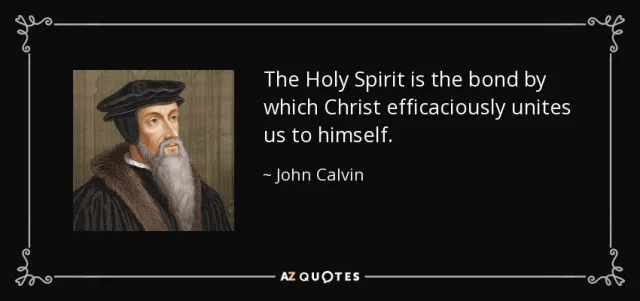
John Calvin observed: “How stupid we would be to want to be liked by those who despise God and who trample our Lord Jesus Christ underfoot! We should instead expect the wicked to mock and reject us, seeing that we cannot persuade them to honor God as they should and to submit reverently to his word.”
One of the greatest hindrances to faithful ministry in our day has been an uncrucified lust for the world’s praise. Pastors and elders must never forget that “the wisdom of this world is folly with God” (1 Cor. 3:19), and that we His servants are, as Paul says, “the scum of the world, the refuse of all things” (1 Cor. 4:13).
Instead, the Apostle is calling for elders to live lives above reproach—not only above the reproach of those inside the church, as he called for in 1 Timothy 3:2, but also above the reproach of those outside the church. Sometimes a prospective elder’s unbelieving relatives, coworkers, or neighbors may know more about his character than his fellow church members. If unbelievers know him to be marked by immorality or drunkenness, or by a lack of discipline or integrity, while at the same time he is serving as an elder in Christ’s church, they will ridicule him as a hypocrite, and the name of Christ will be blasphemed because of it (Rom. 2:24). Paul requires that this not be so.
Though the enemies of the truth will seek to discredit the character of God’s servants, elders must “keep [their] conduct among the Gentiles honorable” (1 Peter 2:12), “so that, when [they] are slandered, those who revile [their] good behavior in Christ may be put to shame” (1 Peter 3:16). If charges are brought, they must never stick, and they must be shown to be illegitimate by a clear appeal to the man’s life. Under the examination of insiders and outsiders, the man of God must live a life above reproach. May God give grace to His servants, that we might walk worthy of such a high calling.
May the Lord’s truth and grace be found here. Have a blessed day in the Lord.
7 Moreover, he must be well thought of by outsiders, so that he may not fall into disgrace, into a snare of the devil.” (1 Timothy 3:7 (ESV)
A suburban church’s elders in a major metropolitan Midwest city sensed God’s call to relocate the congregation closer to the city’s downtown. This was due in large measure because the church outgrew its facilities and for a desire to a visible presence for Christ in a populated area often overlooked. When a property with several existing buildings became available, the congregation sensed it was God’s will to purchase it with the purpose of renovating all the structures and using them for worship and ministry.
One of the experiences in the process was the pastor met with the families of the neighboring community located across the street of the church’s newly purchased property. Initially, the church’s new neighbors were less than excited about having a congregation of Christians as their new neighbors. They expressed their opposition to, if not disdain towards, the pastor and the church in no uncertain terms at a community meeting. It was not an optimistic beginning.
However, something marvelous occurred as the congregation cleaned, renovated and relocated into and onto the new church campus. The neighborhood began to see Christian people who were friendly, helpful and caring. What began as opposition soon turned into affirmation by the local residents. When once they groaned about a church across the street from their homes, they now were glad to have such a presence. They began to respect, and even like, the pastor, the church’s leadership and congregation.
It cannot be overstated the importance of a pastor’s, and elders’, reputation with those who do not belong to the church. What was true for Timothy as the pastor of the church in Ephesus, remains true for local pastors, and elders today. How unconverted and unchurched people feel about a church’s leadership is huge. The church’s leadership must do everything they can to have a good and positive reputation with outsiders, without changing the message of the Gospel of Jesus Christ.
The Apostle Paul wrote regarding an elder, pastor, or overseer they “must be well thought of by outsiders,” This in addition to all the other characteristics previously mentioned in the context of I Timothy 3:1-6. The phrase must be (δεῖ; dei) refers to what is presently and actively necessary and ought to be.
What is necessary is for overseers to be well thought of. To be (ἔχειν; echein) means to presently, actively and infinitely possess and hold onto something. In the context, what the elder is to presently, actively and infinitely possess is to be well thought of (καλὴν μαρτυρίαν; kalen martyrian). This refers to a good reputation and testimony. This good reputation and testimony are the elder’s responsibility to foster and cultivate. He must do everything he biblically can to pursue this purpose and goal. This good reputation the elder pursues results in outsiders (ἔξωθεν; exothen), or the unconverted, agreeing the pastor possesses a good testimony of faith in Jesus Christ.
The pastor must be ethical, faithful, and biblical before a watching and ungodly world. He must refrain from any and all behavior, speech, or thinking which in any way compromises his reputation and ultimately the reputation of Jesus Christ who represents. He must guard his heart (Prov.4:23-27).
Otherwise, he may fall into disgrace. To fall (ἐμπέσῃ; empese). This means to actively experience at a particular point in time disgrace (ὀνειδισμὸν; oneidismon). This refers to public reproach (Rom. 15:3; 1Ti 3:7; Heb. 10:33; 11:26; 13:13).[1] This disgrace Paul referred to as “a snare of the devil.” A snare (παγίδα; pagida) means a trap and danger solely originating from the devil.
“A leader in the church must have an unimpeachable reputation in the unbelieving community, even though people there may disagree with his moral and theological stands. How can he make a spiritual impact on those who do not respect him? (Matt. 5:48; Phil. 2:15),” explains Dr. John MacArthur.
In his book The Pastor as Leader, Dr. John Currie, professor of pastoral theology at Westminster Theological Seminary in Philadelphia writes the following concerning the pastor’s character and the tragedy of failing to pursue a good reputation.
“While this book was being written, the church was rocked again and again by dramatic and devastating news of corrupt pastoral leaders. One popular preacher-leader abandoned his faith and his marriage. A respected apologist was discovered to have lived a secret life of immorality, financial corruption, and wicked manipulation of those who had trusted him for spiritual care. A pastor who had reached the heights of celebrity was dethroned from his ministry empire because of angry, unaccountable, brutal leadership of colleagues and blatant dishonesty for financial gain. Denominational leaders were being investigated and called to account for covering up vile sins perpetrated by false shepherds.”
“These are merely a sampling of the cases of corrupted character and their ruinous consequences exposed publicly. By the time wickedness like these examples makes headlines, there have typically been repeated episodes of less known compromises in the offending leader’s life, incremental concessions that C. S. Lewis called “those little marks or twists on the central inside part of the soul which are going to turn it, in the long run, into . . . a hellish creature.” The most scandalous hypocrisies are often rooted in seemingly less significant character issues that have gone unaddressed in the life of a pastor.”
“Because pastoral leadership is the process where a man of God leads the people of God by preaching the word of God, the pastor’s example is essential to the process of leadership. The walk of a man of God must be integrated with the word he has been sent to preach. He must pursue conformity to Christ as he leads for Christ, because his stewardship includes the duty to serve as an example for those to whom he preaches (1 Tim. 4:12; cf. Titus 2:7; 1 Pet. 5:3),” explains Dr. Currie.
Dr. R. C. Sproul writes, “Non-Christians should be able to look at a Christian leader and say that he lives according to his profession and is quick to repent when he fails to do so. Yet all believers should be known by their exemplary lives, their living of “a peaceful and quiet life, godly and dignified in every way” (1 Tim. 2:2). What is the testimony your non-Christian friends, neighbors, and co-workers would give about you? If accused of being a Christian, would you be found guilty?”
May the Lord’s truth and grace be found here. Have a blessed day in Christ.
“He must not be a recent convert, or he may become puffed up with conceit and fall into the condemnation of the devil.” (1 Timothy 3:6 (ESV)
Puritan and biblical commentator Matthew Henry writes, “The more ignorant men are the prouder they are.”
There is a difference between a new convert, and a mature believer. The mature believer knows what he doesn’t know and where to find the answers, while the new believer doesn’t even know the questions. Therefore, it is imperative a new believer in Christ should not serve as an overseer, elder or pastor.
The Apostle Paul clearly stated an elder must not be a recent convert (νεόφυτον; neophyton). The phrase literally refers to a new or young plant. The English word neophyte, meaning a novice, beginner, recruit, and trainee, comes from this Greek word.
If such an individual assumes the office of overseer, he may become puffed up with conceit (τυφωθεὶς; typhotheis). This metaphorically means to be wrapped up in the smoke of pride and his own self-importance. When young converts are in positions of church leadership, their immaturity becomes apparent to everyone but themselves.
“Do you see a man who is wise in his own eyes? There is more hope for a fool than for him.” (Proverbs 26:12 (ESV)
“The sluggard is wiser in his own eyes than seven men who can answer sensibly.” (Proverbs 26:16 (ESV)
“Live in harmony with one another. Do not be haughty, but associate with the lowly. Never be wise in your own sight.” (Romans 12:16 (ESV)
“Do nothing from selfish ambition or conceit, but in humility count others more significant than yourselves.” (Philippians 2:3 (ESV)
Putting a new convert into a leadership role would tempt him to pride. Elders, therefore, are to be drawn from the spiritually mature men of the congregation,” explains Dr. John MacArthur.
Paul explains such conceit could cause the young believer to “fall into the condemnation of the devil.” One commentator writes, “Lest being proud of his degree he be likewise condemned as the devil was for lifting up himself by pride.[1]
In his book Biblical Eldership, author Alexander Strauch writes, “Scripture prohibits a ‘new convert’ from serving as an elder. A new convert is a beginner in the faith, a baby Christian, a recent convert. No matter how spiritual, zealous, knowledgeable, or talented a new convert may be, he is not spiritually mature. Maturity requires time and experience for which there is no substitute, so a new convert is simply not ready for the arduous task of shepherding God’s flock.”
“The position of elder (especially in a large, well-established church such as the one in Ephesus) carries considerable honor and authority. For a recent convert, the temptation of pride would be too great. Pride would destroy the man, causing personal disgrace, loss, exposure, divine chastisement, and possibly wrecking his faith. It would also hurt the church. So, Paul warns against appointing a new convert as an elder.”
“Today’s passage warns the church not to ordain new converts as elders (1 Tim. 3:6). Without seasoning and maturation, men are ill-equipped to deal with the complexities that confront the church and the discipline of its members. Overestimating their own wisdom, they may deal poorly with people, lording their authority over God’s flock instead of shepherding with lovingkindness (1 Peter 5:1–5),” explains Dr. R. C. Sproul.
“Not having faced the Christian’s unique trials and temptations, they can split churches when they value their way over “the unity of the Spirit in the bond of peace” (Eph. 4:3), refusing to compromise when Scripture permits it. Lacking knowledge of the church’s history and confessions, they can in their pride wander after heresies long ago refuted. New converts may exalt themselves and if so, may also endure the casting down that the Devil experienced, revealing their profession of faith to be false (1 Tim. 3:6).”
Much care is to be taken when a church calls a man to be an overseer, elder, and/or pastor. Popularity, presence, and persuasiveness must not be the characteristics the church looks for in the man who ministers from the pulpit.
“He has told you, O man, what is good; and what does the Lord require of you but to do justice, and to love kindness, and to walk humbly with your God?” (Micah 6:8 (ESV)
May the Lord’s truth and grace be found here. Have a blessed day in the Lord.
4 He must manage his own household well, with all dignity keeping his children submissive, 5 for if someone does not know how to manage his own household, how will he care for God’s church?” (1 Timothy 3:4–5 (ESV)
“Eli was a priest when the judges governed Israel, and as such he was supposed to be an example to the people as their worship leader. Yet his homelife made it impossible for him to be a model for those under his care. Scripture minces no words in describing his sons as “worthless,” men who “did not know the Lord” (1 Sam. 2:12). We would not ordinarily blame Eli for his sons’ adult transgressions, especially since Eli did rebuke them for their sins (vv. 22–26). Apparently, however, Eli’s admonitions were half-hearted because God charged the priest with exalting his sons above the Almighty (vv. 27–29), something that Eli likely did from their youth. Eli’s disordered, undisciplined, sinful family revealed that his heart was not wholly devoted to the Lord. Being unfit for leadership, Eli was finally removed from his position (vv. 30–36; 4:12–18),” explains Dr. R. C. Sproul.
“Ancient peoples believed that private behavior was indicative of effective leadership and, consequently, that a family’s conduct determined whether the father would be a skilled leader. Well-behaved kids revealed consistent, caring discipline at home, which proved that a man could govern a group larger than his family. Many people today reject this premise, but Scripture sides with the ancients on this matter, telling the church to choose for elders only those men who manage their homes in dignity, with submissive children (1 Tim. 3:4).”
The Apostle Paul emphasized to Timothy the importance of an elder’s family life. Since leadership is all about character, the elder’s true character is most often displayed in his home and among his family. A man who is ungodly at home, while pretending to be godly at church gatherings, is not fit for the office of overseer. Much too often an individual is selected to be an elder because of his status in the community, his wealth and/or influence.
Paul said an elder must manage his own household well with all dignity. The phrase He must manage (προϊστάμενον; proistamenon) means to presently and personally lead, help and guide his own household. Household (οἴκου; oikou) refers to his family. This household management must be done well (καλῶς; kalos), meaning to be done rightly, correct, and in excellence. All dignity (πάσης σεμνότητος; pases semnotetos) refers to personally possessing every kind of proper and respectful behavior.
The apostle continued by stating keeping his children submissive. Keeping (ἔχοντα; echonta) means to presently and actively possess submissive children. Submissive (ὑποταγῇ; hypotage) not only means obedient but also responsible to and responsible for one’s family. This is what the elder’s children (τέκνα; tekna), offspring or underage son or daughter must demonstrate.
The logical reason for such a requirement is explained in vs. 5. “For if someone does not know how to manage his own household, how will he care for God’s church?” Leadership in the home must precede leadership in the church. In other words, leadership in a public forum of one’s church must be based upon a prior leadership in the private setting of one’s home.
“The submission that qualifies a man to be an elder is not instilled through a harshness or legalism that requires perfection or that the children be something other than what they are, both of which will provoke the child to anger. Instead, it results when a father raises his kids in “the discipline and instruction of the Lord” (Eph. 6:4), which, one commentator says, manifests itself in a firmness that makes it advisable for children to obey, a wisdom that makes it natural for them to obey, and a love that makes it a pleasure for them to obey,” continues Dr. Sproul.
“Ruling the church well requires the same sort of nurture, courage, and thoughtfulness that make discipline effective. This is a common-sense observation that the Lord Himself approves in today’s passage. If a man cannot lead his own family, how can we expect him to lead the family of God (1 Tim. 3:5)?”
John Calvin states an elder is an individual “who has learned to govern a family by wholesome discipline.” For those who read this essay and who serve as an elder in a local church, may this be true of each of us.
May the Lord’s truth and grace be found here. Have a blessed day in the Lord.
…3 not a drunkard, not violent but gentle, not quarrelsome, not a lover of money.” (1 Timothy 3:3 (ESV)
“In the first set of seven requirements the subdivision is as follows: under the caption “above reproach” we find first a set of four requirements having to do with the man’s attitude to Christian morality in general: he must be maritally pure, temperate, sensible, virtuous. Then, two requirements describing the man’s attitude toward (and influence upon) people who stand in some definite relation to the church. How does he treat guests from other churches, etc.? Is he hospitable? What influence for good does he exert on those who require guidance or instruction? Is he qualified to teach? In the second set of seven requirements, we see the man in his daily life, rubbing elbows with his fellow-men at work and everywhere.”[1]
In this article, we examine the first four of seven requirements regarding the elder and his daily life and living. These initial four characteristics are found in today’s featured text.
First, the elder is not to be a drunkard. A drunkard (πάροινον; paroinon) is a heavy drinker and addicted to wine. In other words, he is an alcoholic. See I Cor. 6:10; Titus 1:7. A parallel word is μέθαι (methai), which is also translated drunkenness in Galatians 5:21. Drunkenness is identified as a work of the flesh.
Any man who senses God’s call to the office of a pastor/elder must not overlook this qualification. Too many aspiring pastors and overseers do not give a second thought to this admonition. Neither do congregations who approve their position.
Second, and elder is not to be violent but gentle. Not violent (μὴ πλήκτην; me plekten) means a brawler, striker, or a bully. An elder cannot be a pugnacious person. He cannot be an individual who is aggressive, confrontational, argumentative, and belligerent.
Pastors who publicly state from the pulpit that if anyone disagrees with them to meet them in the church parking lot and to settle their disagreement with their fists violate this qualification. Such an attitude must not be tolerated.
On the contrary, an elder is to be gentle (ἐπιεικῆ; epieke). This means a tolerant, kind and forgiving individual. He is one who is moderate in personality and fair in dealing with people. He is mild, calm, placid, and peaceful.
Third, an elder is not to be quarrelsome. The phrase notquarrelsome (ἄμαχον; amachon) means to be peaceable, to abstain from fighting, and to be a non-combatant. Perhaps, this was a problem within the Ephesian church which warranted Paul to mention it twice.
Fourth, an elder is not to be lover of money. The phrase not a lover of money (ἀφιλάργυρον; aphilargyron) refers to not being avaricious, greedy, grasping and materialistic.
The behavior of many in ministry who stress their need for vast amounts of money is in conflict with the previous admonition. When big houses, private planes, expensive clothing, and brand new cars, among other items, are viewed as necessities of service, it is evidence of violating this command from the Lord.
“Such an office needs the right kind of people to fit it. It must be remembered that the early Christians came from numerous different backgrounds, and this accounts for the seemingly elementary character of some of the requirements, especially the negative ones in v 3. There are conditions about the personal life of prospective candidates. They must be temperate, self-controlled, respectable. They must be above reproach. All these qualities are to be expected in any serious Christian person but especially so in Christian leaders, for anyone whose moral and spiritual qualities do not commend them to their contemporaries are not going to have much influence as Christian ministers, and if they do, it is likely to be destructive.”[2]
May the Lord’s truth and grace be found here. Have a blessed day in the Lord.
Soli deo Gloria!
[1] William Hendriksen and Simon J. Kistemaker, Exposition of the Pastoral Epistles, vol. 4, New Testament Commentary (Grand Rapids: Baker Book House, 1953–2001), 120.
[2] Donald Guthrie, “1 Timothy,” in New Bible Commentary: 21st Century Edition, ed. D. A. Carson et al., 4th ed. (Leicester, England; Downers Grove, IL: Inter-Varsity Press, 1994), 1298.